
Battersea was once a small village by the Thames, with its population centred around Battersea Square.
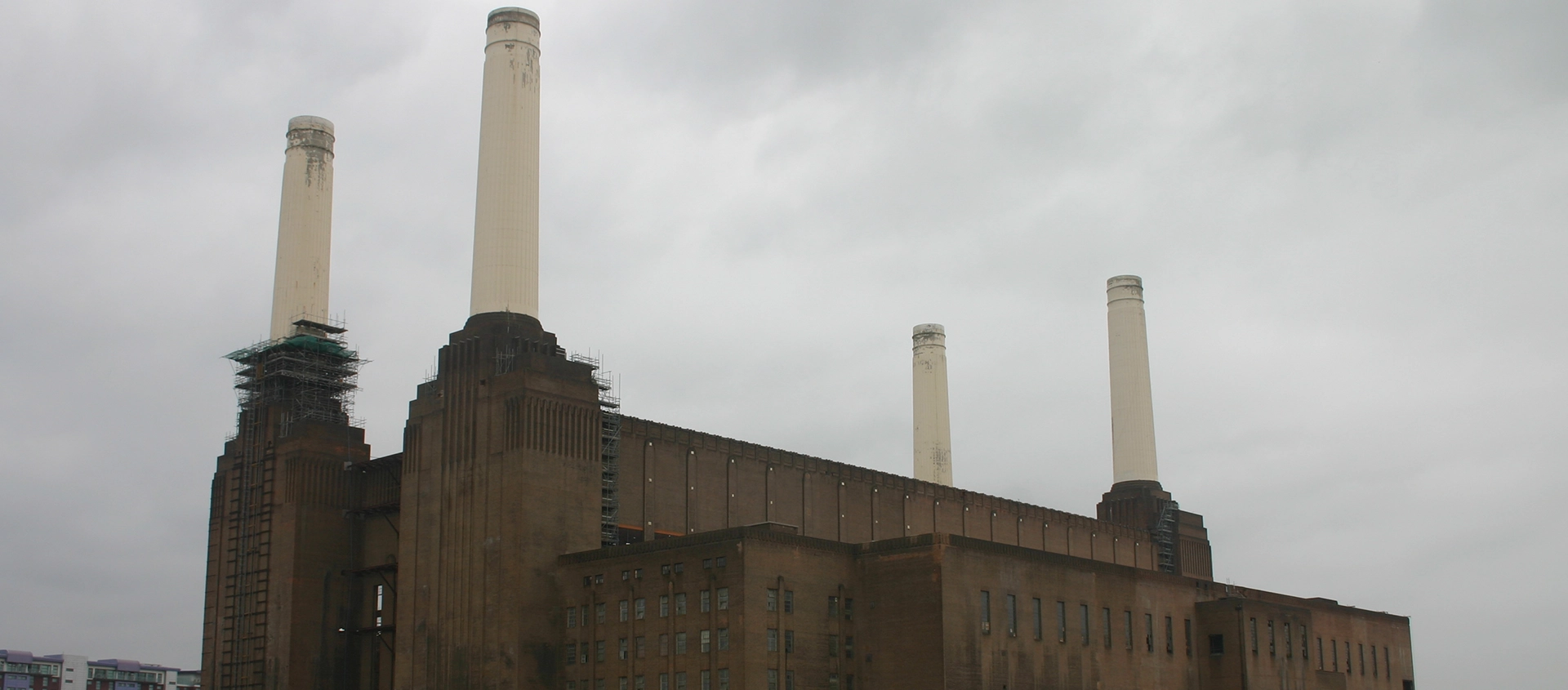
Battersea Power Station Photo © Photographer Sue Cutler
The soil was particularly good for market gardens which flourished there until the 19th Century. Manufacturing came with a rush and the railways were to occupy much of the former market gardens. Nine Elms was chosen for the terminus of the London and South Western Railway quickly expanding with a depot and workshops. Gasholders and factories towered above the streets and many noxious chemical trades moved to the area. In the hundred years from 1801 the population rose from 3,000 to nearly 169,000. In these conditions Battersea became a fertile ground for union activists, such as John Burns.
It was in Battersea that the opportunity was taken in 1858 to create a new part for South London which was to be home to the frivolous side of the 1951 Festival of Britain. Battersea also plays host to the most famous dogs’ home in the world.
Since World War Two, the industrial concerns have left and been replaced by residential developments along the Thames waterfront, and the Battersea Power Station redevelopment is finally happening after many years of dereliction.
From ‘Battersea Past’ by Patrick Loobey – a former WHS Chairman.
